

The rains no longer follow the calendar
Listening to Siaya County's climate story
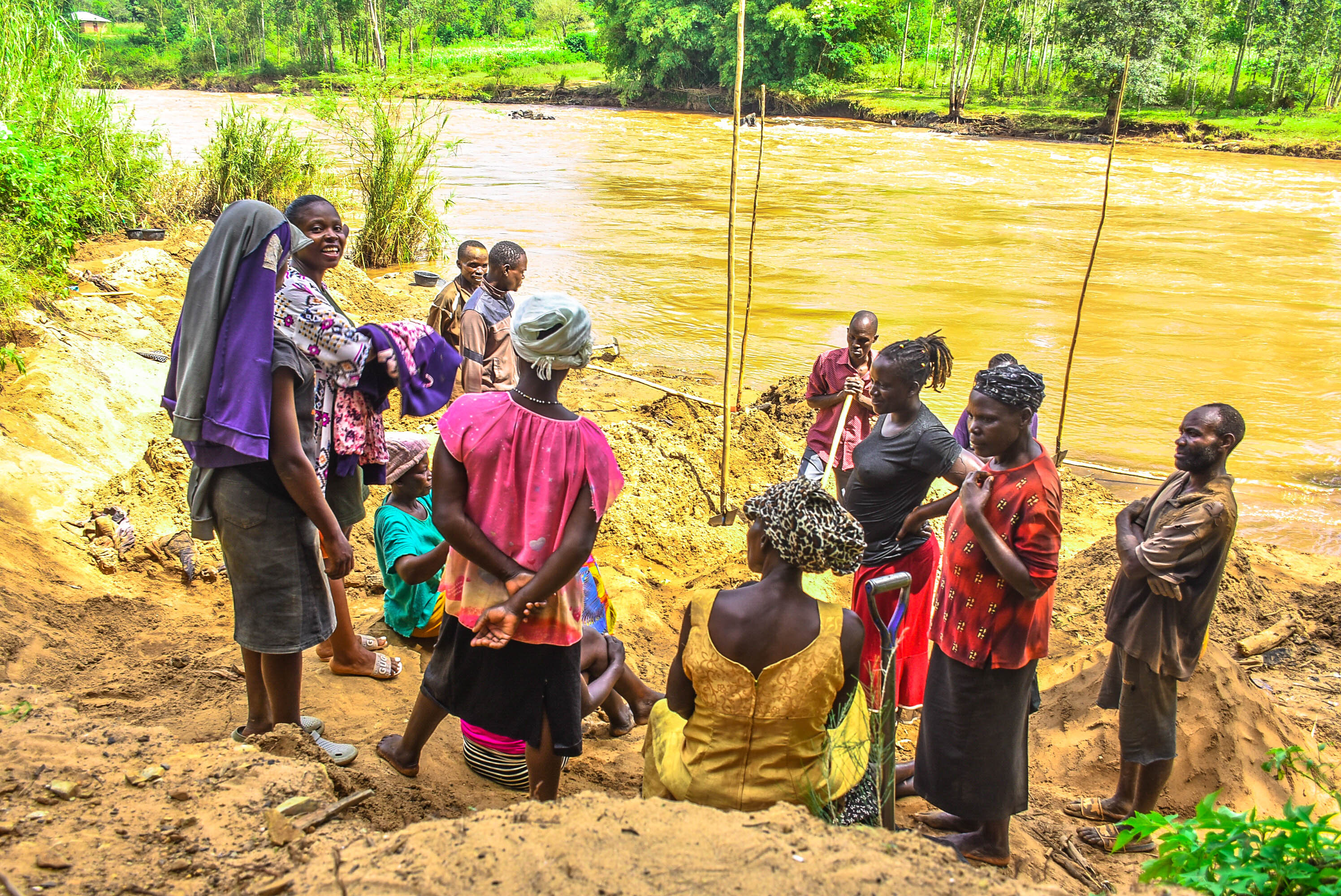
In Siaya County, on the shores of Lake Victoria, farmers have a phrase for what climate change has done to their lives. The rains, they say, "no longer follow the calendar." They come late, stop too early, or fall in a single violent afternoon instead of spreading gently across a season. "You cannot know when to plant anymore," one farmer told the project team. Seeds rot in waterlogged soil, or dry to nothing in ground that never got its second rain.
That sentence, the rains no longer follow the calendar, captures something official climate data rarely does: how the crisis actually feels to the people living it. Over three months in late 2025, Ushahidi and our local partner Kijiji Yeetu set out to gather hundreds of those accounts across Ugunja Sub-County, and to turn them into something Siaya's leaders could act on.
"You cannot know when to plant anymore. The seeds either rot in the soil or dry up." Farmer, Ugunja Sub-County.
Hearing what the numbers miss
The Lake Basin region has long been overlooked in Kenya's national climate planning, even as flooding, drought, and degradation have grown more severe. Part of the problem is invisibility: when there is no good local data on how communities experience climate shocks, it is easy for decision-makers to look away.
So the project began by listening across both the digital spaces where younger residents gather and the doorsteps of those the internet never reaches.
Methodology: How we did it
The project combined digital listening (Facebook and X) with on-the-ground engagement, so that no single channel's blind spots would shape the findings:
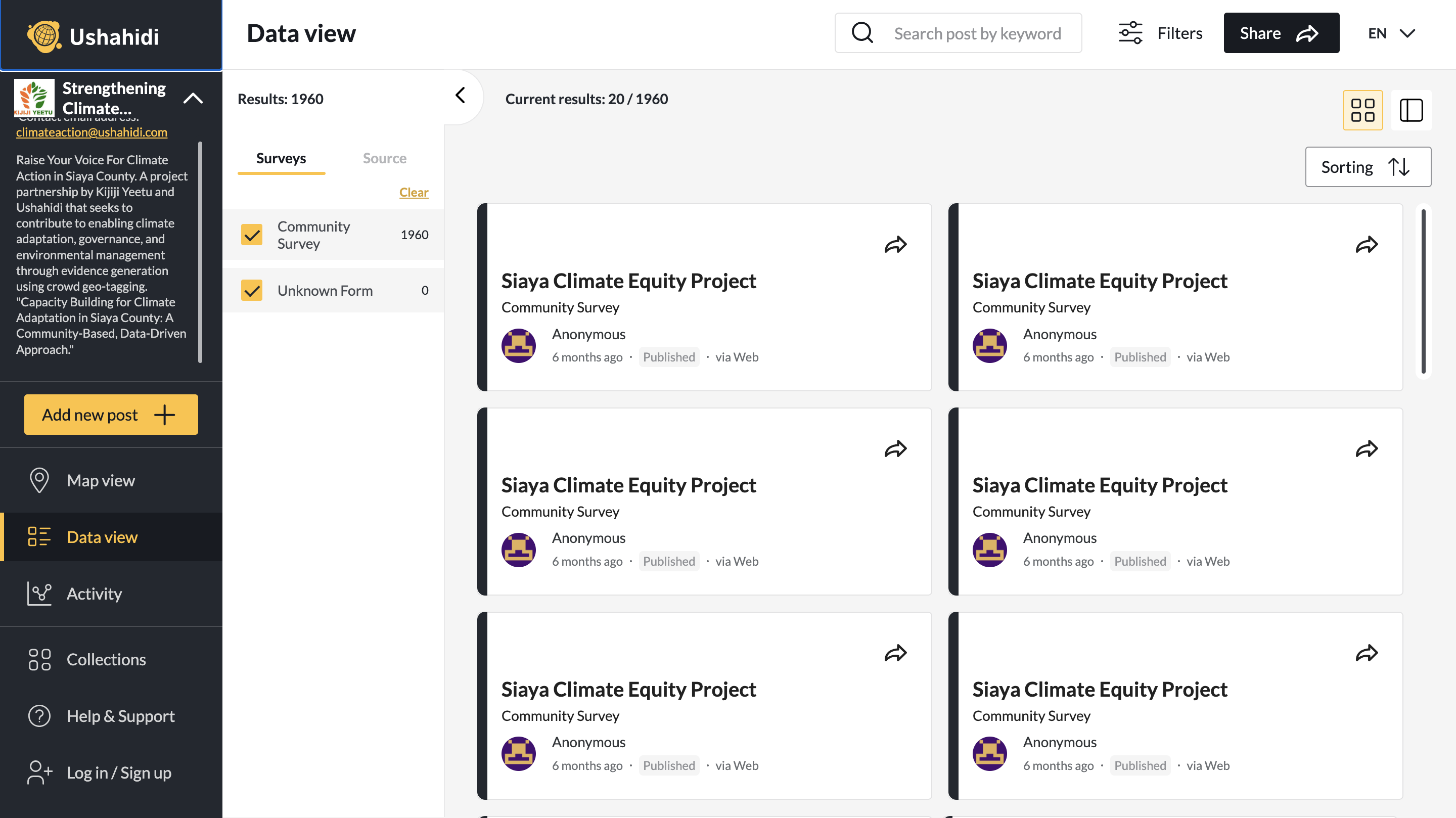
- Social media listening via Distant Voices. Ushahidi's Distant Voices technology analysed climate-related conversations already happening on platforms like Facebook and X, surfacing the perspectives of youth and digitally active residents. Submissions were automatically transcribed, translated, and mapped onto an Ushahidi deployment in near real time.
- Door-to-door interviews with the Ushahidi mobile app. Trusted community data champions from Kijiji Yeetu conducted face-to-face interviews in Dholuo, Swahili, and English, reaching older residents, rural farmers, and people with limited digital access who rarely appear in online data.
- Trained local data champions. Champions drawn from within the county built trust, mobilised participation among marginalised groups, and gave the project legitimacy that an outside team could not have earned alone.
- A mixed approach, by necessity. During the project period, online conversation was heavily dominated by the passing of Rt. Hon. Raila Odinga and the Ugunja by-election,, which is precisely why the door-to-door interviews became essential to surfacing climate-specific voices that the digital noise was drowning out.
- Community validation. Preliminary findings were brought back to residents and stakeholders at a validation workshop on Kijiji Yeetu's grounds, where community members, women, youth, and local leaders confirmed what rang true and corrected what did not, turning data into shared, community-owned conclusions.
- Data protection by design. All data was handled in line with the Kenya Data Protection Act (2019): informed consent, anonymisation of personal identifiers, encryption in transit and storage, role-based access, and clear communication about how each contribution would be used.
A portrait of a county under pressure
What emerged was a steady accumulation of strain. Residents near market centres and riverbanks described sudden floods that turn roads to rivers and push contaminated water into homes, followed by spikes in malaria, typhoid, and cholera. Others spoke of heat that has made the county "too hot compared to the past," drying water pans and exhausting the farmers and boda boda riders who work in it. Women and girls described walking far longer for clean water during dry spells, hours taken from school, work, and farming.

A warning the community made themselves
Then came an observation no rainfall chart would have predicted. Across the validation sessions, residents kept returning to something that, on its face, has nothing to do with weather: crime.
People reported a rise in petty theft of farm produce, livestock, household goods and they linked it directly to climate hardship. When floods destroy a harvest or drought wipes out livestock, income vanishes, and the pressure spills over into the community. "People feel overwhelmed," participants said, "tired of struggling every season." Youth spoke of anxiety about a future that feels foreclosed. For the community, the lesson was blunt: climate change is no longer only an environmental problem. It has become a question of social stability, safety, and mental health.
What communities told us
The accounts gathered across Ugunja pointed to a handful of clear, recurring lessons the kind that emerge only when people describe their own reality rather than answer a checklist:
- Climate is felt first through livelihoods, not weather. Residents rarely spoke about rainfall in the abstract. They spoke about failed harvests, dead livestock, thinning fish stocks, and goods spoiling in the heat. In Siaya, climate resilience and economic survival are the same conversation.
- The damage is compounding, not isolated. Communities drew their own causal chains: deforestation and sand harvesting weaken the land, which worsens flooding, which spreads disease and cuts off roads and schools. People described an environment "changing faster than people can cope." Treating flooding, health, or land degradation separately misses how tightly they are knotted together.
- The social costs are real and under-counted. Residents linked climate loss directly to rising petty crime, anxiety, and depression, the project's most striking finding. Climate response in Siaya needs to reach beyond agriculture and infrastructure into livelihoods, mental health, and community safety.
- People are already adapting — but adaptation is hitting a ceiling. Households described real ingenuity: drought-resistant crops, rainwater harvesting, terracing against erosion, covering bricks with polythene to spare vegetation, even climate lessons in schools. But these efforts stall without financing, technical support, and timely climate information. The appetite is there; the enablers are missing.
- The people most affected are the least heard. Women and girls losing hours to water collection, the elderly, rural farmers, and those without smartphones were the most exposed and least likely to appear in conventional data. Reaching them meant meeting them where they were in their own languages, through trusted local champions.
From conversation to county plan
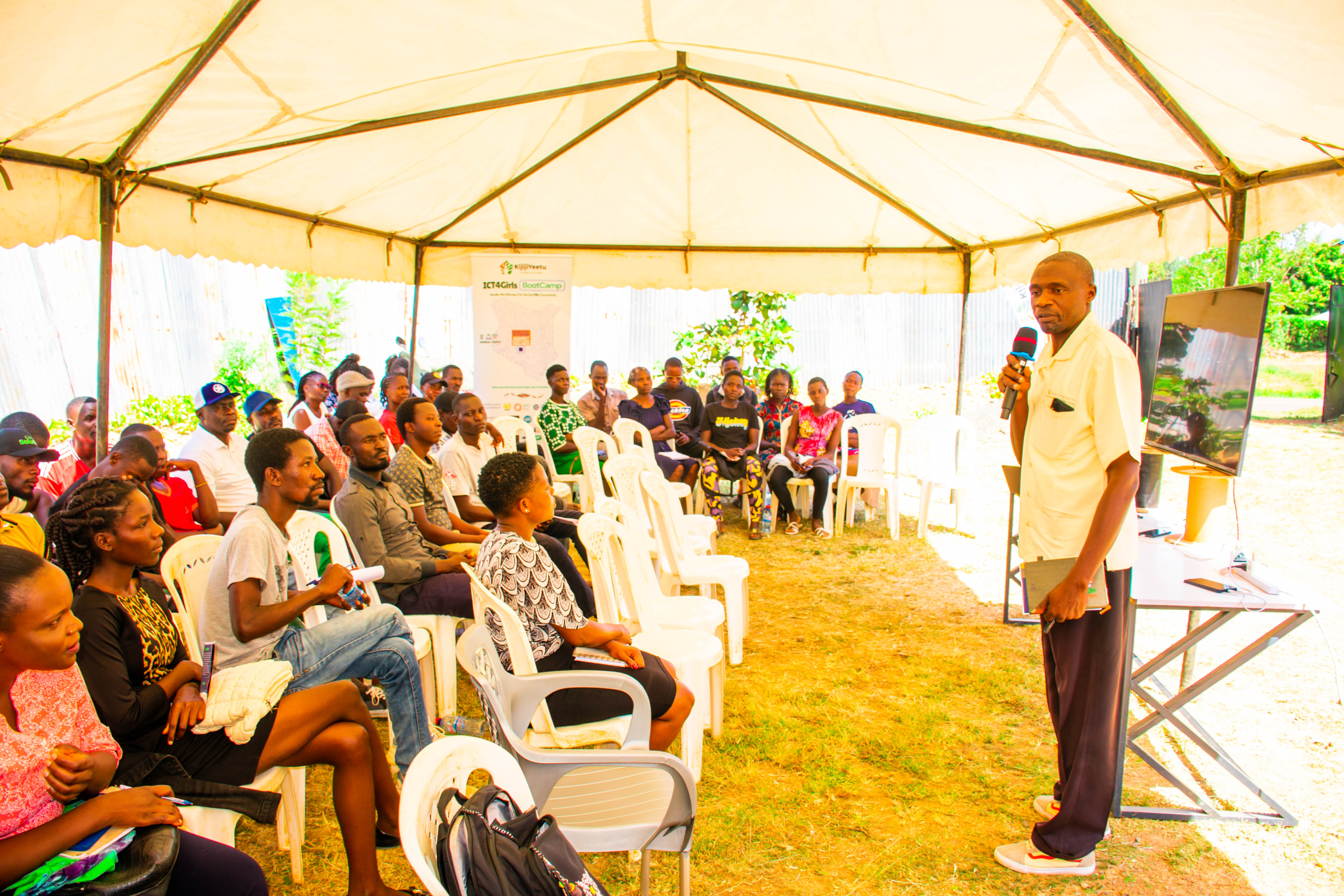
Listening was only the first half. In December, the team brought its findings back to the people who had shaped them. At the validation session, community members and sub-county representatives reviewed the data, confirmed what rang true, and corrected what did not. The result was a shared set of recommendations the community owns: stronger flood early-warning systems, climate-smart farming and drought-resistant crops, better water management, cleaner energy to replace charcoal, enforcement of rules on sand harvesting and deforestation, and climate decisions that include the people most affected.
Those recommendations are now being channelled into the Siaya County Climate Change Action Plan and the Ugunja Integrated Development Plan, with technical support to the county's climate planning committee and a dedicated policy brief turning a season of conversations into a place at the table.
Why it matters
The Siaya project delivered with our local partner Kijiji Yeetu and funded by our good partners GIZ Kenya is a small demonstration of a larger idea Ushahidi has pursued for nearly twenty years: that the people closest to a crisis understand it best, and that the right tools can carry their knowledge to the people with the power to act.
The rains in Siaya may no longer follow the calendar. But for the first time, the community's own account of what that means is written down, validated, and on its way into county policy.
103619
Online voices captured
3437
Voices fully verified and classified as climate relevant
1960
Voices captured through interviews
Published Evidence
- Link to the deployment
Ushahidi Platform
- Project Report
- Project Distant Voices Dashboard
Distant Voices Platform